Preclinical Research That
Powers Our AI
Our AI isn't built on theory alone. We're validating every algorithm against real-world cardiac data,
starting with one of the most demanding signal environments in electrophysiology: the mouse heart.
Why Mouse ECG?
Mouse hearts beat 10x faster than human hearts — 450 to 750 BPM — producing ECG signals that are far more complex and challenging to analyze. If our AI can master this, human ECG interpretation becomes a solved problem. Mouse models are the gold standard in cardiac research, used globally to study disease mechanisms, drug responses, and genetic conditions before clinical trials.
Jerry: Our Research Platform
A cloud-based SaaS platform purpose-built for analyzing 24-hour continuous mouse ECG recordings — continuously updated so your lab always has the latest detection capabilities.
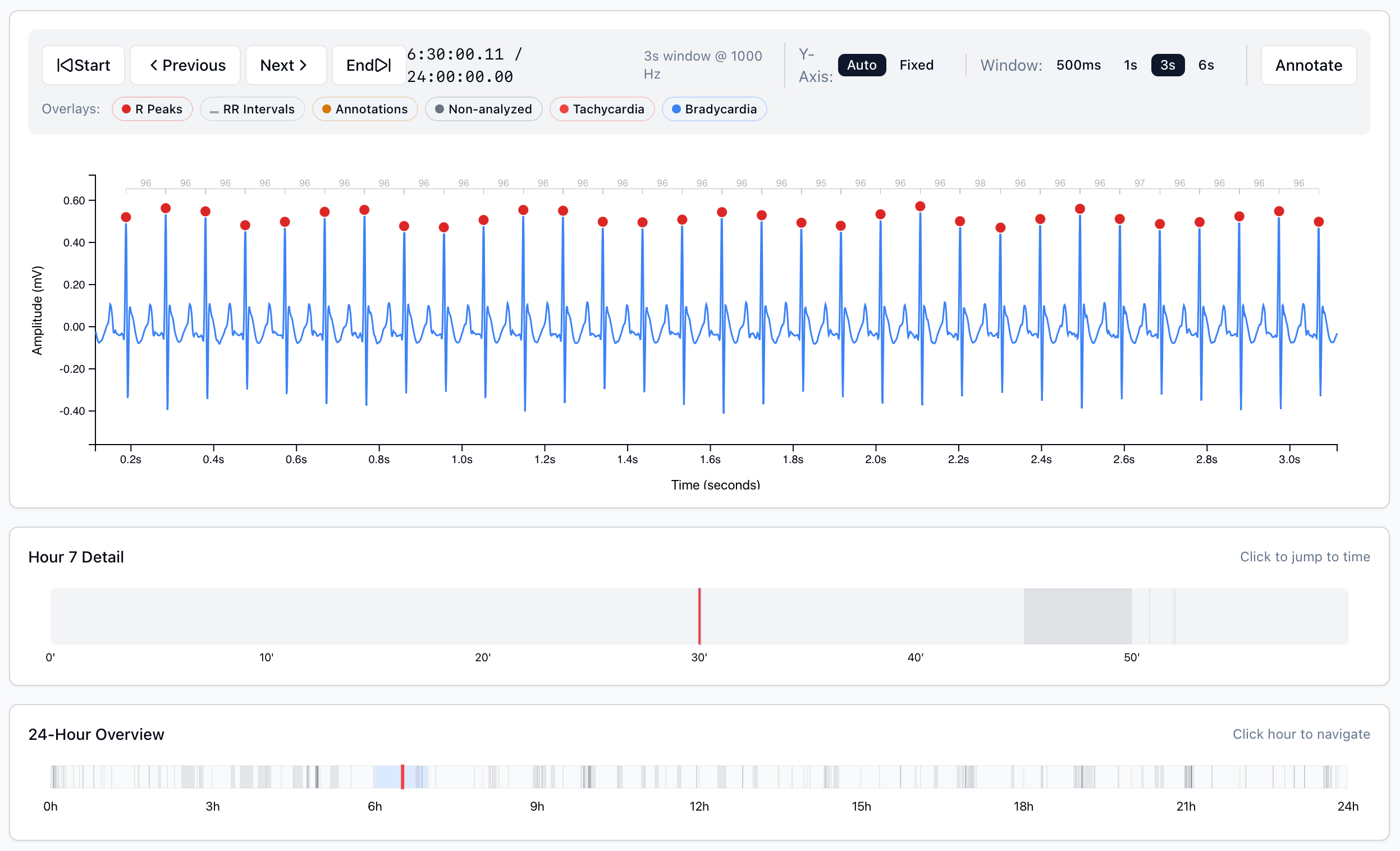
Automated R-Peak Detection — Identifies 600,000+ heartbeats in a single 24-hour recording with sub-millisecond precision, processing in approximately 90 seconds.
Arrhythmia Classification — Detects bradycardia, tachycardia, atrial fibrillation, pauses, PVCs, and ventricular tachycardia. New detection models actively in development.
Heart Rate Variability — Full HRV analysis including SDNN, RMSSD, pNN50, and Poincare plots — essential metrics for cardiac research publications.
From Signal Processing to AI
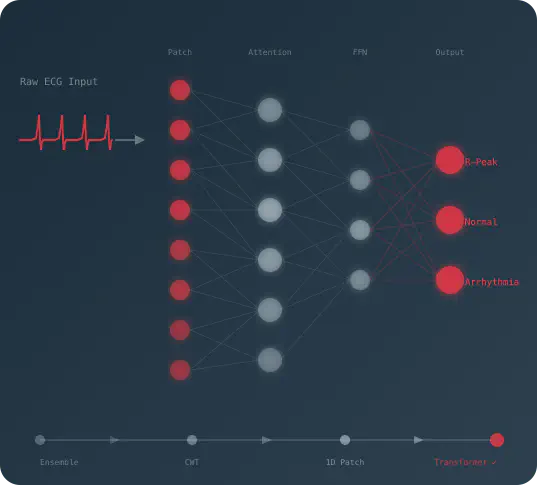
Our research has progressed through multiple generations of detection algorithms — from ensemble voting systems to continuous wavelet transforms — culminating in a proprietary 1D Patch Transformer model. In validation tests, our AI model is meeting or exceeding the accuracy of expert human analysis. This breakthrough validates our core thesis: AI trained on the hardest cardiac signals can generalize to simpler ones.
Research to Clinical Pipeline
A deliberate path from preclinical validation to clinical deployment
Preclinical Validation — Training and validating AI models on 24-hour mouse ECG recordings with expert cardiologist oversight.
Cross-Species Generalization — Extending validated algorithms to human ECG data through clinical database integration.
Clinical Feedback Loop — Building physician review interfaces so expert corrections continuously improve the AI model.
Deployment at Scale — Delivering real-time, AI-powered cardiac diagnostics to hospitals and clinics — starting with underserved rural facilities.
Research Partnership with the
University Partners
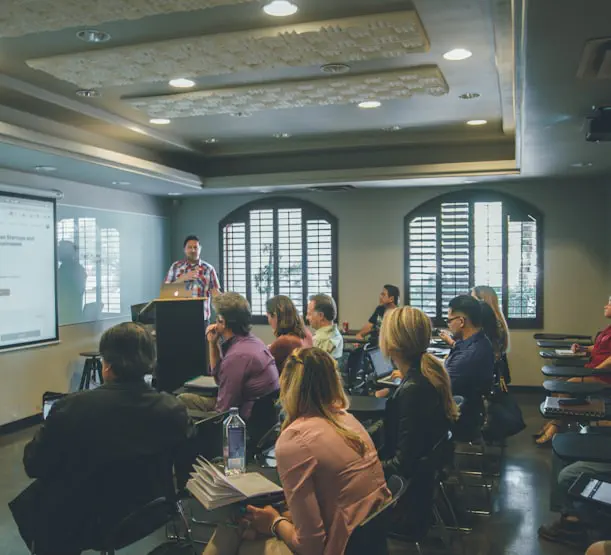
Our primary research collaboration is with the cardiac electrophysiology lab at the a leading academic medical center. Working alongside leading cardiologists and electrophysiologists, we process real experimental datasets, validate our algorithms against expert analysis, and iterate based on direct clinical feedback. This partnership ensures our technology is shaped by the researchers who understand cardiac signals best.
Research Highlights

AI model meeting or exceeding expert human analysis in R-peak detection validation.

24-hour recordings processed in ~90 seconds — enabling same-day research insights.

Proprietary transformer architecture trained on the most complex cardiac signals in electrophysiology.

Active drug study analysis supporting real cardiac research at a leading university.
Collaborate With Us
We're actively seeking research partners to expand our validation and accelerate the path to clinical deployment.

Research Inquiries:
Partnerships:
Careers: